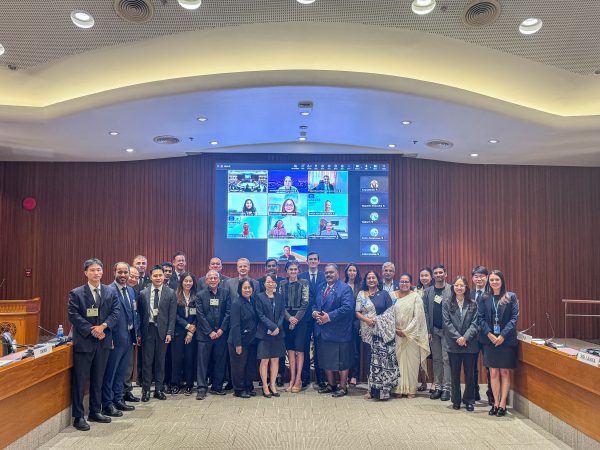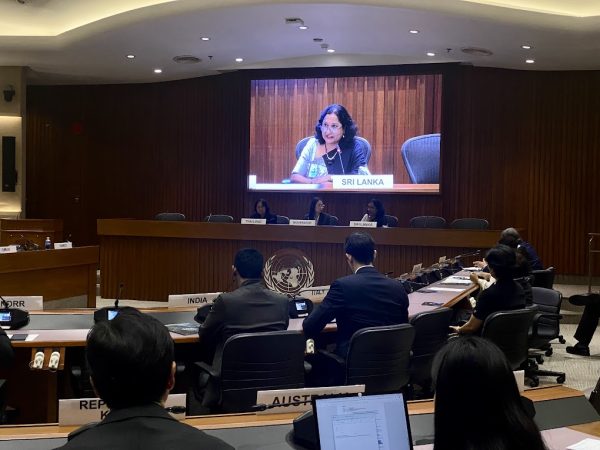
A high-level event marking World Tsunami Awareness Day was held on 5 November in Bangkok, bringing together senior government officials, diplomats, UN agencies, and disaster risk reduction partners to review regional progress and strengthen cooperation on tsunami and multi-hazard resilience. The programme opened with a video message from Special Representative of the UN Secretary-General for Disaster Risk Reduction, Kamal Kishore, followed by remarks from co-chair of the Embassy of Japan in Thailand, reaffirming Japan’s leadership in advancing tsunami preparedness across the Asia-Pacific region. Participants also viewed the documentary “Tsunami Ladies”, which highlighted the vital contributions of women in post-disaster recovery and community resilience.
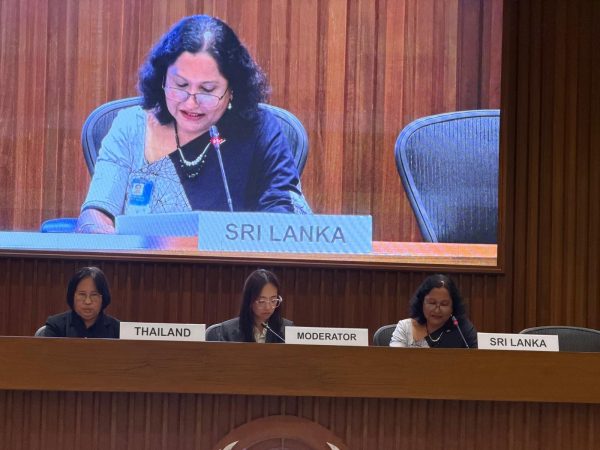
During the high-level panel discussion, Ambassador of Sri Lanka to Thailand and Permanent Representative to UNESCAP, E.A.S. Wijayanthi Edirisinghe, presented Sri Lanka’s experience following the catastrophic 2004 Indian Ocean tsunami, which claimed more than 35,000 lives and caused extensive coastal devastation. She outlined the country’s institutional reforms, including the establishment of the Disaster Management Centre (DMC) for preparedness and response, and the National Disaster Relief Services Center (NDRSC) for post-disaster relief. She also highlighted the significance of the Disaster Management Act No. 13 of 2005, which created the National Council for Disaster Management, chaired by the President, to guide national disaster risk management policy and coordination.
During the discussion, Ambassador Edirisinghe emphasized that women’s leadership has played an important role in recovery after the tsunami, helping with livelihoods, housing, and community infrastructure. She also highlighted Sri Lanka’s efforts to include women in disaster planning through the Community Resilience Framework, climate adaptation programmes, and support for women farmers, widows, and other vulnerable groups.
Drawing on Sri Lanka’s experience, Ambassador Edirisinghe stated several lessons for the region: the importance of mainstreaming resilience into all sectors, building institutional capacity at national and local levels, engaging the private sector and small enterprises in disaster risk financing, and reinforcing community-based approaches where women are central actors in resilience-building.
The event concluded with closing remarks from UN ESCAP and a video message from UNESCO Jakarta, reaffirming the shared commitment to sustained investment, regional cooperation, and risk-informed development to protect lives and livelihoods across the Asia-Pacific region.
Embassy and Permanent Mission of Sri Lanka
Bangkok
26 November 2025